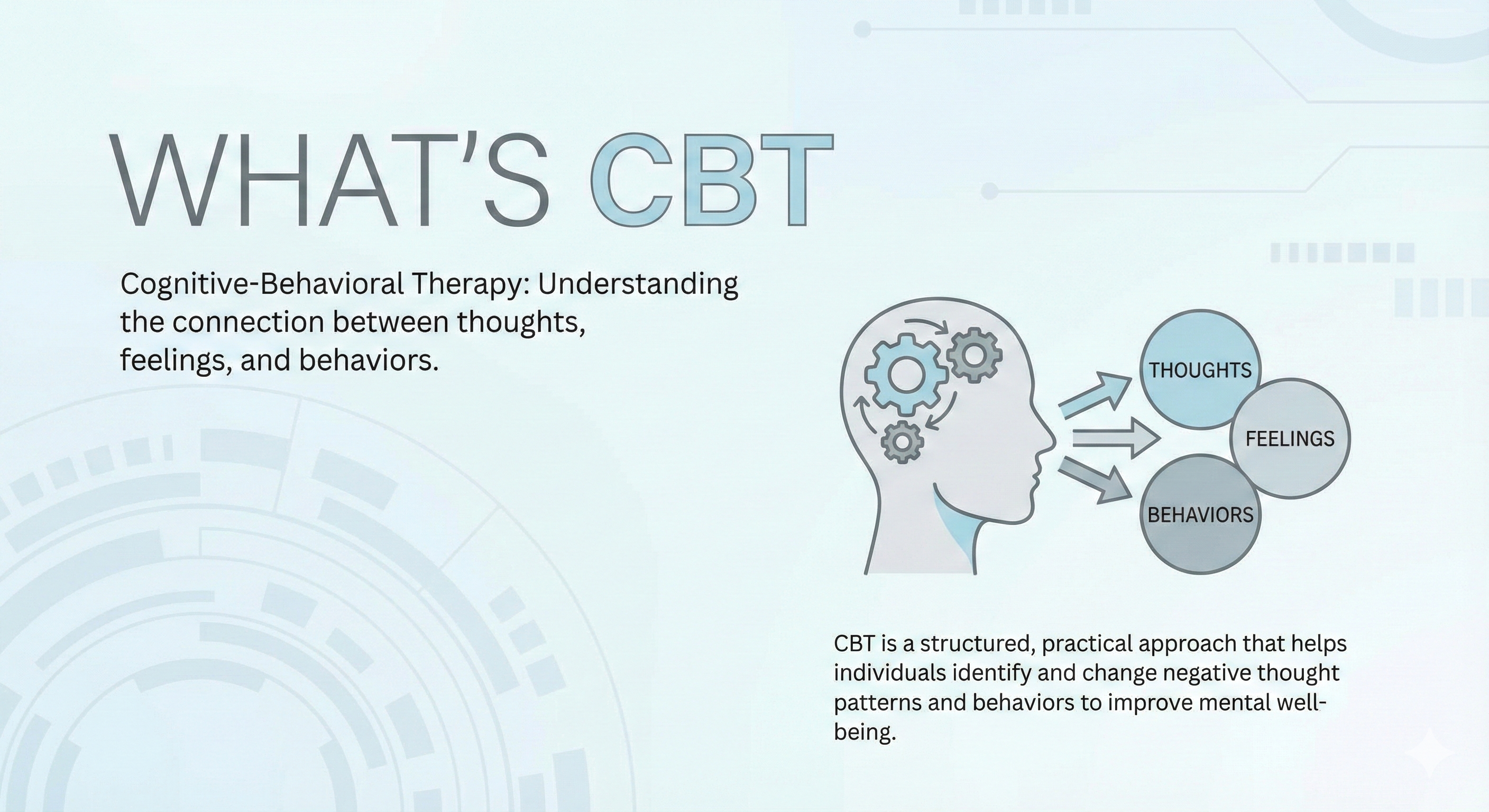
What is Cognitive Behavioural Therapy
Cognitive Behavioural Therapy (CBT) is a highly effective form of psychotherapy that focuses on identifying and modifying dysfunctional patterns of thinking and behaviour.
It is based on the understanding that our thoughts, emotions, and behaviours are interconnected: by addressing and changing these patterns, it is possible to improve general well-being. Originating in the 1960s, CBT is today a first-line treatment recommended by international guidelines (such as NICE in the UK) for various psychological disorders.
Who is it for?
The goal of CBT is to help individuals develop effective coping strategies. It is a time-limited and goal-oriented therapy, effective for:
- Anxiety disorders (Generalised Anxiety, Panic Attacks, Social Anxiety, Phobias)
- Depression
- Obsessive-Compulsive Disorder (OCD)
- Self-esteem issues
- Post-Traumatic Stress Disorder (PTSD)
- Stress and burnout management
- Emotional regulation difficulties (anger, impulsivity, rumination)
- Insomnia (CBT-I)
- Relationship issues or dysfunctional behaviours (perfectionism, procrastination, emotional dependency)
By learning new skills, you can gain greater control over your thoughts and behaviours, improving your self-esteem and quality of life.
What to expect
Here is generally what you can expect during the three main phases of our work together:
1. The Assessment
In the initial phase, we will work together to gather information about your current difficulties, symptoms, and goals. We will discuss your personal history and explore the factors contributing to the problem. This stage serves to build a shared "map" and a treatment plan tailored to your needs.
2. The Treatment
During sessions, we will engage in active discussion. We will explore the thoughts and beliefs that fuel painful emotions and learn to reframe them. We will identify "mental traps" (cognitive distortions) and use practical techniques to address them. The goal is not just to talk, but to provide you with a toolkit to manage stress.
3. Home Practice
CBT is an active therapy. Between sessions, I will invite you to do small exercises to reinforce what we have learned. This might involve keeping a thought diary, practicing a relaxation technique, or testing a new behaviour. This work is crucial for bringing changes out of the therapy room and into your real life.
Please note: The process is highly collaborative. Your active involvement is the main engine of change. The structure of the sessions will always be adapted to your unique circumstances and pace.